
how are you many drivers become worried that while driving the car the suspension has become very hard and they feel that even a small piece on the road feels like it is under our seat in this condition driving the car becomes very difficult rather controlling the car also becomes difficult i will tell you why this happens and what issue can be i will tell its complete solution from my 15 years experience
I tell you that when you drive the car, you feel the suspension hard when the shock-absorbing parts or springs are not working properly or are damaged, and it can also happen due to tire pressure. First, you should know what the suspension system is. You should also see that.
What Is a Suspension System?
Many people do not know what the suspension system is and what it does. The suspension system separates your car’s body from its tires and absorbs bumps on the road. This way, many drivers and car owners can drive comfortably. Below, I have shown its important parts.
Main Components of Suspension
- Ball joint
- Stabilizer
- Bushings
- Control arms
- Springs
- Shock absorbers
If any of these components are damaged or if you have not installed high-quality components, it can cause problems with your driving. These components should be in proper condition.
Major Reasons and Solution: Why Suspension Feels Stiff
Below, I have shown the reasons and solutions; be sure to read them.
1. Worn or Failed Shock Absorbers
If your car’s bad suspension feels stiff or bounces a lot, one issue could be Worn or Damaged Shock Absorbers/Struts. This problem occurs when driving over bumps, causing the car to bounce and feel unstable.
Many drivers get confused about what is happening and how to fix it. I have shared the solution below based on my experience so you can drive safely. To fix this issue, you should follow my solution.
Below, I have listed the symptoms that occur due to Worn or Damaged Shock Absorbers/Struts.
- There may be reduced road grip.
- Because of this, the car bounces repeatedly.
- When braking, the car moves forward.
- Even small bumps on the road have a strong impact.
If your car has worn or Damaged Shock Absorbers/Struts, the solution is as follows: first, park the car on a flat surface, then use a jack to lift it.
After that, use a wrench to secure the car and remove the wheel. Once the wheel is removed, use a screwdriver to loosen the bolts on the shock absorbers or struts, then remove the shock absorbers or struts.
Then check if they are functioning properly; if not, install new ones. After that, use a torque wrench to tighten all bolts again. This way, the issue is resolved.
Once this is done, take the car for a test drive. If the issue is still not fixed, there may be another problem, as explained below; be sure to read it.
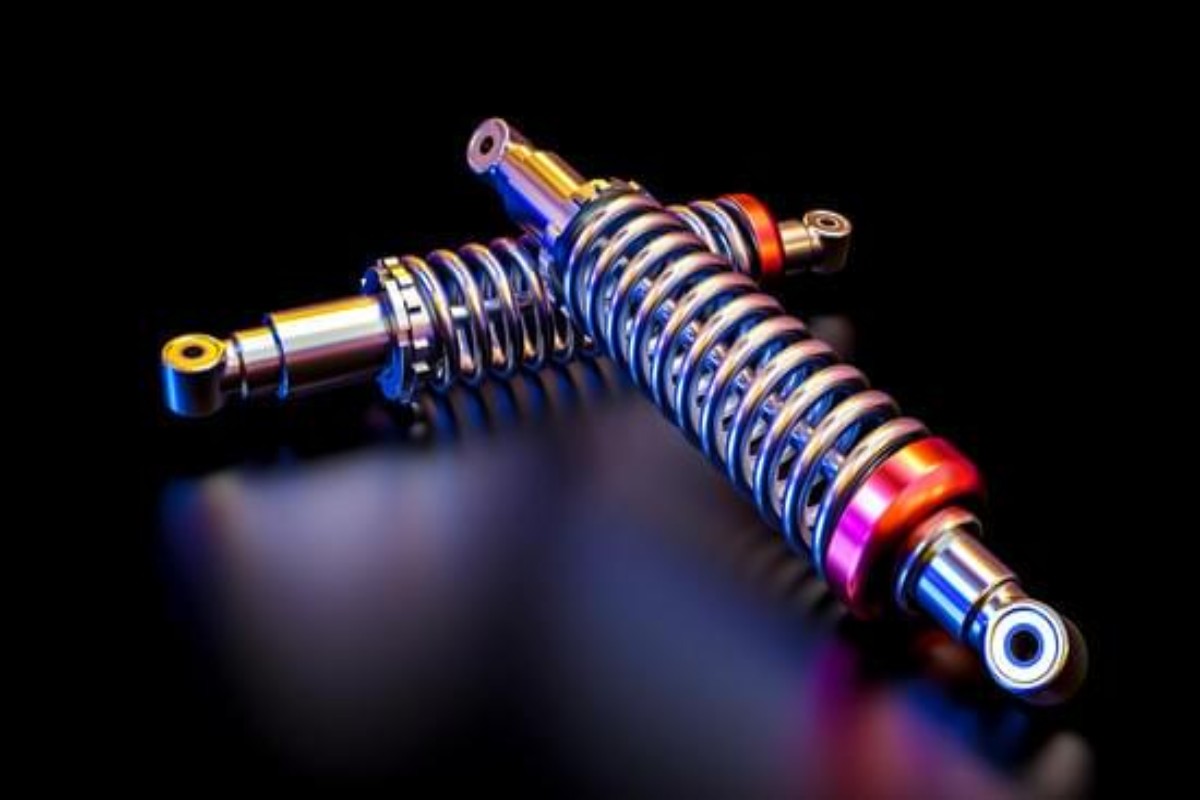
2. Incorrect or Hard Springs
If your car has Incorrect or Hard Springs, it can make the suspension feel stiff. This issue can cause a very rough ride and create serious difficulties while driving.
Many drivers do not know what the problem is. I have explained the solution below based on my experience, so you can fix it yourself and not be worried.
If the issue is still not resolved after this, there may be another problem, as explained below.
Below, I have listed the tools we use to fix this issue.
- Jack: We use it to lift the car.
- Lug wrench: We use it to remove the wheel.
- Spring compressor: We use it to remove the coil.
- Wrench and socket set: We use it to loosen or tighten bolts.
- Torque wrench: We use it to securely tighten bolts.
- Replacement spring: We use it to replace any damaged spring.
- Flashlight: We use it when we need to see any hidden or deep parts.
If you have this issue in your car, first park your car on the side, as I tell you in every solution. After that, use the jack to lift the car. Once you have lifted the car, use the lug wrench I mentioned earlier to remove the wheel.
After that, use the spring compressor to remove the spring. Then use the wrench to remove the old springs and install the new compressed spring in its place.
Once installed, use the torque wrench to tighten the bolts and reinstall the wheel. After you have installed the wheel, go for a drive to check if the issue in the car is fixed.
Once the issue is fixed, your problem is solved. If not, there may be other issues, which I have explained below in my article.
3. Overinflated Tires
Just like the two issues I mentioned above, this is also a problem. If your car has overinflated tires, many problems can arise.
When you drive, it becomes difficult. Whenever the car hits a bump on the road, you feel it inside, and you get worried, wondering what happened.
Because of this problem, the distance between your car’s tires and the road increases, making it hard to drive comfortably. This issue can also cause your car to slip when turning, leading to an accident.
It negatively affects the driver’s mind. I want you to read my article so that if you face this problem, you can solve it. I have provided a complete solution based on my experience.
Many people, including articles from ChatGPT and others, offer incomplete solutions, but I have provided a full solution below. Read it.
If you want to fix this issue, I have listed the tools below and explained how to use them.
- Tire pressure gauge – We use it to check tire pressure.
- Air compressor – We use it when the tire has too much or too little air.
- Valve cap remover – We use it to remove or attach the valve cap on the car tire.
- Flashlight – We use it to see parts that are in the dark.
To fix this issue, first park the car, then use the pressure gauge to check the tire pressure. After checking, if the air is too much, use the air compressor to fill it.
If the air is low, use the tire inflator to fill it. After that, remove the valve cap from the car tire wheel and install a new one. Use the flashlight to check that the valve is properly installed.
Then take the car for a drive to see if the issue is fixed. If not, I have listed 5 more issues below; read them.
4. Worn Suspension Bushings
If your suspension feels stiff, there is another reason. Earlier, I told you 3 reasons above; now, one more reason is worn suspension bushings, which make your suspension stiff.
These bushings are made of rubber and designed to absorb road shocks and forces.
If your car feels a lot of jerks, it means you have bad bushings, which can create problems for your driving friends. Do not worry, below I have shared a solution from my experience.
When this bushing becomes bad or damaged, then the symptoms I mentioned below happen. I have fixed all the issues below, so this issue is resolved.
- car jack
- wheel spanner and lug wrench
- socket
- breaker bar
- bushing press tool
- torque wrench
- lubricant spray
If you want to fix this issue, I have outlined the tools above; I have used them myself and written the solution. First, lift your car with a jack, then use a lug wrench to loosen the nuts on all four tyres.
After opening the nuts, remove the wheel from your car and set it down. After doing this, there is a control arm on your car wheel. Spray it with a breaker bar so the control arm bolts can be loosened easily.
After that, use a press tool to remove the old bushing and check whether it is okay. If the bushings on your car are worn, replace them. After that, reinstall the control arm.
After installing this, also reinstall the wheel. In this way, your issue will be fixed.
If, after fixing this issue, your suspension is still stiff, there is some other issue with your car, which I have listed below.
5. Low Profile Tires and Large Alloy Rims
If your car’s suspension is stiff, there is another issue at play.
Earlier, I told you about 4 or 5 issues. This issue is called Low Profile Tires and Large Alloy Rims because the sides of low-profile tires are thin and cannot absorb the bumps on your car.
If your car has large alloy rims, they can damage your tires. No matter how good your tires are, they can still get damaged. Because of this, many car owners and drivers have to face problems.
They look here and there for a shop but cannot find any. Because of this problem, driving can become difficult. I have shown the solution to this difficult problem below.
I have listed the tools below to fix this problem, and I have used them myself to provide the solution. Friends, with this solution, you can fix it yourself wherever you are. Definitely read it. Thank you very much.
- jack
- wheel spanner
- torque wrench
- tire pressure gauge
- tire balancing machine
- tire repair kit
To fix this issue, first park your car on one side. After that, use a jack to lift the car, then a lug wrench to remove the wheels one at a time.
After that, check your car’s rims; if any are bad or damaged, replace them. After that, install new rims and apply grease so they do not make noise.
Then check your car tires; if they are of good quality, it is very good; if not, replace them with good quality tires. After that, use a pressure gauge and fill the pressure correctly.
Then reinstall the wheels and lower the car from the jack. Take the car for a drive. If you follow this solution as I explained in the article, the issue will be fixed.
If it is not fixed, I have explained 3 more issues and their solutions below. Check them so that all your problems are solved.
6. Seized Stabilizer Links
If your car suspension is still stiff even after fixing the previous issue, there is another issue: Seized Stabilizer Links. When your suspension stabilizer links get stuck, they stop working properly.
If they do not work properly, when you apply the brakes, the car leans forward, which is not good. Because of this, your car’s handling does not work properly,y and it becomes difficult for you to control the steering.
Many problems occur while driving due to this issue. But do not worry; I have written the solution below using my experience and tools. You can read it and fix this problem.
Below, I have written the tools to fix this problem and the solution using those tools.
- replacement stabilizer links
- jack
- wheel spanner
- socket and ratchet set
- breaker bar
- penetrating lubricant
- hammer
- torque wrench
If you want to fix this problem, first park your car on one side. After that, use a jack to lift the car, then a lug wrench to remove the wheel.
After removing the wheel, check whether the stabilizer link is bad or damaged, and apply penetrating lubricant to it. This will loosen it.
After that, remove the seized link using a socket and ratchet set, a breaker bar, and a hammer, because after many years it can get stuck and not come out, which is why I told you to use these tools.
After that, reinstall the links and tighten them with nuts. Use a lug wrench to reinstall the wheel and also tighten its nuts. Start the car and take it for a drive.
In this way, the problem will be fixed. If the problem is still not fixed after this, I have explained 2 more issues below. Read them as I have written.
I have written this from my experience, and every line is meant to help you.
7. Constant Overloading
If your car’s suspension feels stiff, another issue is at play: constant overloading. When you load the car with more weight than necessary, or after long trips, the suspension becomes weak and stiff.
When you hit bumps on the road, it has a serious effect and can also damage your car’s brakes. Because of this, many drivers become worried and check what has happened.
When you apply the brakes, the brakes may not work properly, and an accident can happen. But do not worry; below, I have written the complete solution based on my experience.
I want you to fix it yourself.
- load distribution measuring tool
- wheel spanner
- torque wrench
- tire pressure gauge
First, park the car on one side. After that, remove the extra load from the car. Then use a jack to lift the car and use a lug wrench to remove the wheels. After that, check the springs, absorbers, and bushings.
If any of these parts are damaged, replace them with new parts. Use a lug wrench to tighten their bolts. After that, replace all four tires on your car with new ones, as they have been damaged by the extra load.
After installing new tires, tighten their nuts with a wrench. Then check the car’s tire pressure, fill it properly, and also check the load’s weight.
In this way, the issue will be fixed. If it is still not fixed, then there is one last issue; check it so that this problem is resolved.

8. Poor Wheel Alignment
If your car’s suspension is stiff due to poor wheel alignment, that’s an issue too. I have told you about 7 issues above, and this is the 8th.
When your car’s tires are not properly aligned, it doesn’t run correctly and pulls to one side. I will explain to you: if the handlebars of our bike are bent, the bike will lean to one side.
Similarly, if a car’s tires are not properly aligned, it also moves to one side. Because of this, you cannot control the steering, which can cause damage to your car and to you.
When you drive on rough roads, the car feels very stiff, which makes driving difficult. I have written a solution for this because if you read 1000 articles, no one writes this solution; they only explain the reason.
I have provided the solution below and explained the other issues above; read on.
- wheel spanner
- alignment rack and wheel alignment machine
- wrenches and a socket set
- torque wrench
- measuring tape or camber
Below, I have written the solution to this problem using tools. First, park your car on one side. After that, lift it with a jack and remove the wheel.
After that, check the steering and suspension components, including ball joints, control arms, bushings, and tie rods. If any of these are damaged or bad, replace them and apply grease.
After that, remove the old wheel and install a new wheel, and tighten its parts. After installing the wheel, lower the car from the jack and take it for a drive. In this way, the problem will be fixed.
After solving all these problems, I have given an example from my real life below; read it.
Real Life Example from My Experience
One time, I was very happy, and I drove my car at high speed on the road. There was a pothole on the way, and my car hit it. I felt the pothole very strongly, and I was very worried.
I wondered why this happened, because no matter how big the pothole was, I should not have felt it in the car. Finally, I parked my car on one side and removed all the parts.
I have worked for 15 years at a company in the United States, so I know, as an expert, that any problem can occur in a car at any time and anywhere. I kept all the parts with me and checked all the issues.
I showed them and solved this problem. I also explained when you should consult an expert.
When to Consult a Professional Mechanic
Above, I have written an article. If you have read the entire article, then you can easily fix all these issues.
If you have not touched my article or read a single Word, then you need to consult an expert, because without it you will not be able to fix the issue. I have also listed the costs below that may be incurred.
Estimated Repair Cost
If you have read my article above, you can fix all these issues yourself, and most parts will cost around $100 to $200. If you get all these parts fixed by an expert and they install them, then the cost will be around $400 to $500. I have also given prevention tips.
Prevention tips
- Keep tyre pressure at the recommended level.
- Avoid overloading your vehicle.
- Check shocks, struts, springs, and bushings regularly.
- Lubricate suspension joints and bushings.
- Drive carefully on rough roads.
- Ensure aftermarket suspension parts are installed correctly.
Below, I have written the answers to your questions and also the conclusion.
Frequently Asked Questions (FAQs)
1. Can Weather Affect Suspension Performance?
Yes, extreme weather can affect suspension performance. Cold temperatures can stiffen rubber bushings and thicken shock fluid, making the ride feel harsher, while very hot conditions can soften components and reduce their effectiveness.
2. Does Driving On Rough Roads Damage Suspension Over Time?
Yes, driving frequently on rough or uneven streets can wear out shocks, struts, and bushings faster. Over time, this downsizes ride comfort and increases vehicle suspension issues.
3. How Often Should Suspension Components Be Inspected?
Suspension components should be inspected every 20,000–30,000 miles or during regular vehicle servicing. Early checks help prevent stiffness and other vehicle suspension issues.
4. How often should I Check Suspension Components?
Suspension components should be matched every 20,000–30,000 miles or during regular vehicle upkeep. Early inspections help detect wear and prevent ride discomfort or more serious suspension problems.
Conclusion
A stiff suspension can make helming uncomfortable and affect handling, but most causes are easy to recognize and fix. Regular inspections, proper tyre pressure, and prompt sub of worn shocks, struts, springs, or bushings keep the ride smooth. Sidestep overloading and maintain lubrication to prevent stiffness. Handling issues early not only improves mitigation but also extends the life of your breather and ensures safer driving.