
Brake pedal vibration is a problem that causes your car’s brake pedal to make noise, and this happens when you apply the brakes. Because of this, many drivers and car owners get worried, and they check to see what is making the noise, but they do not know.
If this problem is in your car as well, I, with 15 years of experience, will provide the solution and explain the issue below, so your problem can be solved. I am an expert with 15 years of experience, and I have brought this solution to you. Be sure to check below.
If your car’s brake pedal makes noise, it happens when there is an issue in your car’s brake pedal, such as a damaged rotor, loose parts, or a bad rotor, which can also cause vibration. If you want to solve this problem, I have explained the issue and its solution below so you can get rid of it. Read below to learn what the issue is and how to solve it.
Brake Pedal Vibration: Reasons and How to Fix Them
As I mentioned above, when your brake pedal vibrates, there may be an issue behind it. Now I am discussing those issues below and explaining how to solve them.
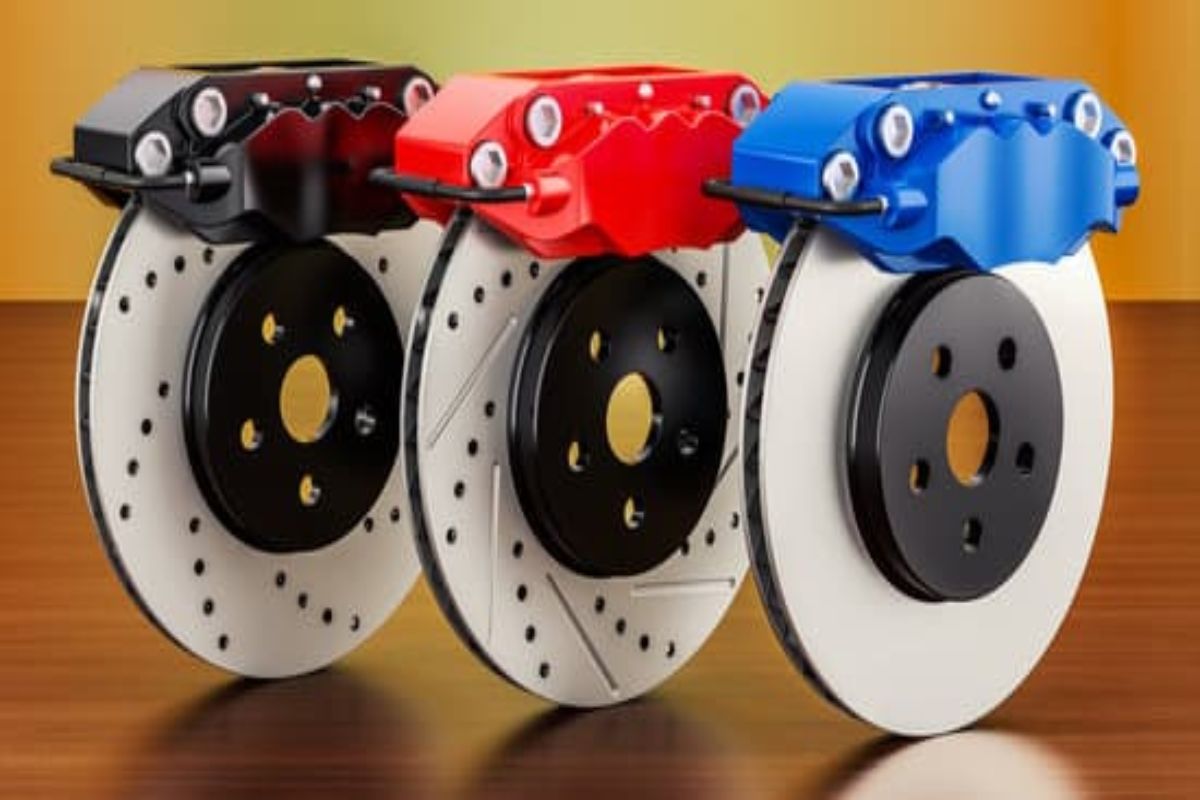
1. Warped / Bent Brake Discs (Rotors)
If your brake pedal vibrates, a possible issue is warped or bent brake discs (rotors). When they are damaged or worn out, the lower part bends, leaving your brake pedal sink without a smooth surface.
Because of this, when you apply the brakes, it makes noise, and your brake pedal shakes. If your car has damaged or worn rotors, it may not work properly, causing brake pedal vibration and concern.
Even if you check for the problem, it can still trouble you. I have explained below to prevent you from worrying, so you can benefit from it.
solution
If your car’s brake pedal causes vibration due to warped or bent brake discs (rotors), the solution is as follows. First, you need to lift your car, and to do this, use a jack.
Once the car is lifted, use a lug wrench to remove the wheels. After removing the wheels, use a socket set to remove the caliper, then remove the rotor.
Once everything is removed, check the caliper to see if it is working properly; if not, install a new one. Then check the rotor and replace it with a new one if needed, and tighten it.
After this, clean the car hub with a clean cloth to remove any grease or oil that may have fallen onto it. Then reinstall the spins and use a lug wrench to tighten all the bolts, as any loose bolt can also cause noise.
After tightening all the bolts, take the car for a test drive. If your brake pedal still makes noise, there is some other issue. But I have explained below, so do not worry, I will guide you step by step and give you a very easy solution to fix this problem.
2. Uneven Brake Pads
Above, I have explained one issue and its solution. This is another issue that can also cause your brake pedal to vibrate.
If your brake pads are not fitted properly, they do not work together with the rotors. Because of this, when you apply the brakes, your brake pedal starts moving and vibrating, and you may also hear squeaking or rubbing noises.
At that time, many people can get frustrated, because the squeaking sound can be irritating. If this issue occurs, even when you apply the brakes, they may not work properly, and you could hit something.
But I will protect you from all these problems because in my solution, I have explained how you can fix them and stay safe from accidents.
Solution
If your brake pedal vibrates due to uneven brake pads, here is the solution. First, park your car on one side, then use a jack to lift it. Once the car is lifted, use a lug wrench to ease the nuts and yank the tire.
After removing the tire, use a socket set to remove the brake caliper inside. Once you have removed it, you will know how to take it out properly. After removing the brake caliper, drag the brake pad, then check the brake rotor.
If it is damaged, install a new one and check the brake pads; replace them if needed. After replacing, use a C-clamp to press the piston so that the caliper fits.
Once this is done, reinstall the caliper, then fit the tire back, and clean the area around the caliper with a cloth. After cleaning, lower the car carefully with the jack and take it for a drive to check if the issue is fixed.
If your brake pedal still vibrates, there may be another issue, which I have explained below, and I want you to see it as well.
3. Wheel Alignment or Balancing Issues
If your car’s brake pedal vibrates, there may be another issue. I have told you about some of the above, and now I will tell you about another issue below.
One issue is Wheel Alignment or Balancing Issues. Because of this, your car’s brake pedal vibrates. If your car’s tires are not properly fitted, it puts extra pressure on the other tires and your brakes, causing the brake pedal to vibrate.
As a result, your car’s speed decreases, and you cannot turn the steering wheel properly. This issue prevents you from driving the car safely, especially over bumps or uneven roads, which can make you very worried.
But I have explained the solution below for you, so when you drive with your family, there will be no problem.
Solution
If your car’s brake pedal produces vibration due to wheel alignment or balancing issues, the solution is as follows. First, park your car on one side, as I always tell you to do in every situation.
After that, lift your car using a jack. Once you have lifted the car, use a lug wrench to remove the wheel. Remove it, then check whether the wheel alignment is correct.
If it is correct, do not change it; if it is not, adjust it. After that, use wheel alignment to align the wheels properly. Once you have done this, check the balance using a balancing machine and correct it.
If the balance is too much, reduce it. After reducing it, reinstall the tires properly and use a lug wrench to tighten the tire nuts so they are fitted correctly and your tire works properly.
I am explaining all this in detail so you can fully understand which tool to use, how to use it, and why. If this issue still isn’t fixed, I have explained other issues and their solutions below; read them as well.
You can comment and let me know whether you are getting bored.
4. ABS Activation (Normal Case)
If your brake pedal is vibrating, it may be due to ABS Activation (Normal Case). Because of this, your car’s brake pedal moves, and you become worried.
When the ABS anti-lock braking system activates, it can cause your car’s brakes make to shake. When you apply hard braking, the brake pedal also vibrates.
Because of this, you feel your car’s brakes are not working properly, worry about why this is happening, and do not understand what the problem is.
I have explained the solution below so that you can fix it yourself. In this way, your worry will be reduced, and you can drive properly and fix it yourself.
You may have read many articles, but this issue and its solution are not explained there. I have 15 years of experience, so I am explaining this solution to you; you should read it.
Solution
If your car’s brakes vibrate due to ABS Activation (Normal Case), then the solution is this. First, stop your car, then check whether this happens only when you apply hard braking.
If it only happens during hard braking, there is nothing to worry about, since that happens often. After that, check the warning light on your car: if it is on, there is an issue; if it is off, there is no issue.
After that, use an OBD scanner to scan your car’s code. If any number appears, there is a problem; if no number appears, there is no problem.
After that, check the brake rotor and brake pads. Use a lug wrench to remove the wheel, then remove the rotor and check it. If it is damaged, replace it.
After that, check the brake pads, and if they are not okay, replace them as well. In this way, you can fix the issue and have your problem solved.
After doing this, reinstall the wheel and take the car for a drive to see if the problem is fixed.
If your car still has this issue, there may be another problem, some of which I have explained above, and some below. Read them as well.
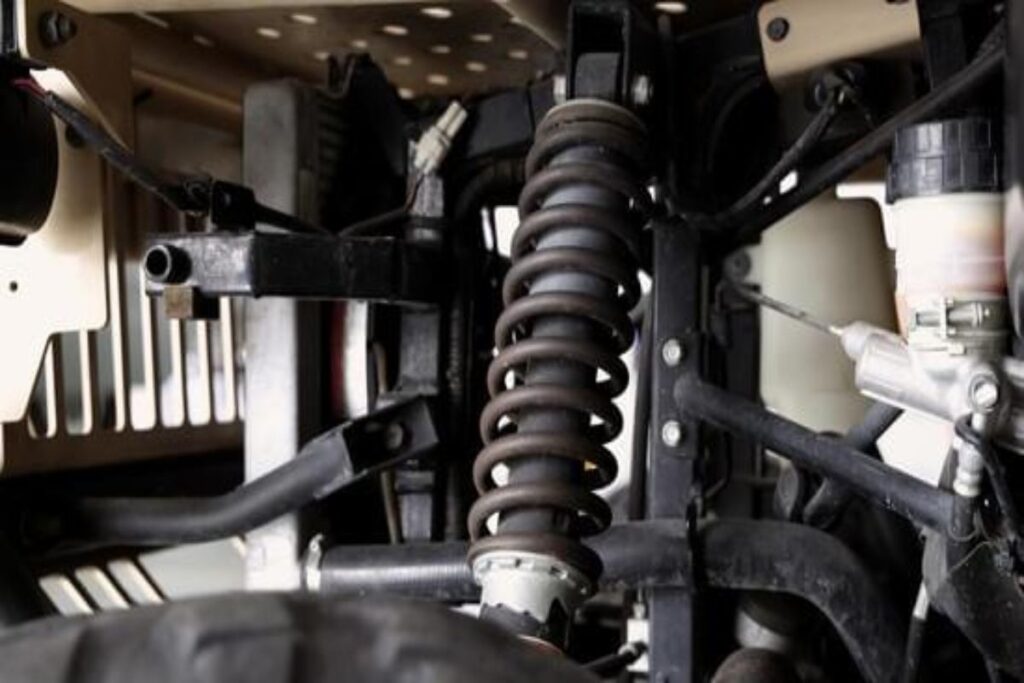
5. Loose Suspension Parts
Loose suspension parts are an issue because they affect how your car’s brake pedal moves. This happens when your car’s brake or suspension parts become loose, and they do not hold the brakes and their components firmly.
Because of this, your car’s brake pedal moves and becomes loose, and it also produces noise. Just like when a motorcycle chain becomes loose and starts making noise, when suspension parts become loose, they also start shaking.
Because of this, you cannot control the steering properly, and when you apply the brakes, they do not work correctly either, which can cause an accident.
But after many years of hard work, I have written the solution below, so check it.
Solution
If your car’s brake pedal vibrates due to Loose Suspension Parts, then the solution is as follows. First, park your car on a completely flat surface, as I always tell you to do for every solution.
After that, remove your car’s tire using a lug wrench. Then check the suspension parts such as bushings, ball joints, and tie rods. If any part is damaged or worn out, replace it.
If it is dry, apply grease. After that, use a socket set to tighten any loose bolts so that they do not make noise. Once this is done, if any suspension parts are damaged, replace them.
After replacing, reinstall the wheel and carefully lower the car with the jack. Take it for a drive, and you will know whether the issue is resolved.
If it is still not fixed, I have explained two other issues and their solutions below, so that if any of these issues exist in your car, you can fix them yourself.
6. Brake Caliper Problems
If your car’s brake pedal was vibrating before, and it is still vibrating, then it is a Brake Caliper problem. As a result, your brake pedal vibrates. I am telling you this.
This happens when your car’s brake caliper is damaged or worn out, which can cause it to get stuck and not work properly.
When damaged, it holds the caliper and prevents the rotor from being pressed correctly by the brakes. If this happens, your brakes do not work properly.
I am telling you this because many of my clients face this issue, and I explain to them that it occurs for this reason.
If your car’s brake caliper is damaged, it can also produce many noises and affect your drive, and you could have an accident. If you want to avoid all these problems, then be sure to read the solution given below.
Solution
If your brake pedal vibrates due to the brake caliper, then the solution is as follows. First, park your car. After parking, lift the car carefully. Once lifted, remove your car’s tire.
After removing it, check the rotor using a lug wrench. If it is damaged, replace it with a new one. After that, check the caliper. If it is not working properly, replace it as well.
Once this is done, use a C-clamp to press the piston so that the caliper works correctly. After doing this, check for any loose bolts and tighten them.
After tightening, if any part is dry, apply grease to prevent noise. After doing all this, your issue will be resolved. If it is still not fixed, there is one last issue below, along with its solution.
7. Dirty or Rusty Brake Discs
If your car’s brake pedal vibrates due to Dirty or Rusty Brake Discs, then this is also an issue. As I mentioned above, I have explained 6 issues and their solutions, and this is one of them.
When your car’s discs get rust, they do not work properly. Damaged or rusty discs can cause uneven braking and slipping. If you do not fix them on time, they can also damage your brakes.
When you apply the brakes, they don’t work properly, which can lead to an accident. If you do not clean them daily, they become damaged. Be sure to read the solution for this.
Solution
For this solution, you should always park your car on one side first. After that, use a jack to lift the car. Once the car is lifted, use a lug wrench to loosen the wheel bolts and then remove the tire.
After that, use a spray cleaner and a wire brush to clean the discs, as rusted discs do not work properly. After scouring, wipe them with a clean fabric.
Then check whether any part of the discs is damaged; if so, replace it. Once this is done, reinstall the wheel and carefully lower the car with the jack.
After lowering the car, take it for a drive, and you will see that the issue is resolved because there is no other problem. Below, I have shared a real-life incident from my own life; read it as it happened when I was the driver.
Real-Life Example from My Driving Experience
Above, I have outlined many issues and their solutions. Now I will share a real-life incident from my own life. Once, I was driving somewhere with my family.
At that time, I was the driver, and my car’s brake pedal started moving. My family saw this and got worried, thinking the car had broken down. I told them not to worry and that I would check it.
I parked the car under a tree and took out all the tools. I checked each issue individually to see why the brake was vibrating. I fixed each problem, and after that, our issue was resolved, and we continued driving.
I thought I should share this issue and its solution because many drivers make this mistake, and they should see it.
Common Mistakes Drivers Make
Above, I have transferred a real-life example from my own life. Now I will tell you that many drivers make mistakes, as shown below.
- When braking, keep constant pressure on the brake pedal to avoid faster wear and shaking.
- Ignoring tire maintenance: Driving on unevenly worn or underinflated tires compromises braking and handling.
- Sudden or hard braking: Banging brakes often instead of slowing down gradually, raising the risk of vibrations or skidding.
- Not checking rest or brake parts: Ignoring worn or loose parts that can cause steering and brake issues.
- Overloading the car: Carrying too much weight can strain the brakes and rest, leading to irregular wear or shaking.
- Driving over potholes or uneven roads at high speed: This can damage brakes, tires, or the suspension, resulting in vibrations or instability.
I have now told you about the standard mistakes drivers make. Below, I have explained when you should consult an expert.
When to See a Mechanic
I am telling you to take your car to a mechanic. If you read my article and follow it, the mechanic will fix all these issues, and your problem will be solved.
If you do not read my article and try to fix it yourself, you will not succeed. In that case, you should take your car to a mechanic when you cannot fix it yourself. Below, I have explained the cost.
Cost to Fix Brake Pedal Vibration
Here, I will tell you how much it may cost to fix these issues. If you read my article and fix the issues yourself, the cost will be between $20 and $80.
If you do not read my article and get these issues fixed by a mechanic, it may cost between $100 and $150. If you want to save this cost, read my article and fix it yourself. I have also shared prevention tips below, so be sure to check them.
Prevention:
Above, I have told you how much the cost may be. Now I will share prevention tips, and after that I have also provided answers to your questions below, so be sure to study them.
- Keep brake parts clean to avoid vibration.
- Brake smoothly, avoid premature hard stops.
- Maintain correct tire stress and wear.
- Check for loose bolts near the wheels.
- Slow down on uneven or pothole roads.
Frequently Asked Questions (FAQ)
Q1. Can worn tires cause brake pedal vibration?
Yes, worn or uneven tires can cause brake pedal pulsation by creating instability during braking. This varying contact makes the vibration travel up to the brake pedal.
Q2. Can temperature changes make my brake pedal vibrate?
Yes, sudden temperature changes can affect braking surfaces and cause uneven contact, leading to brake pedal vibration. This is more noticeable after driving in cold or wet situations, followed by hard braking.
Q3. Is brake pedal vibration dangerous?
Brake pedal vibration can be dangerous if it occurs frequently or worsens over time. It may lower braking control and should be checked as soon as possible.
Q4. Does ABS wear contribute to pedal vibration?
Yes, wear in the ABS can contribute to pedal beat, especially during hard or sudden braking. This vibration occurs when braking pressure is applied unevenly.
Conclusion:
Brake pedal vibration is usually caused by uneven touch during braking due to wear, dirt, or loose parts. Factors like worn tires, rough driving, and sudden braking can make the problem worse. Temperature shifts and repeated hard stops also contribute to vibrations. Routine inspection, smooth driving, and fundamental care can help avert this issue. Fixing minor trials early supports dying smoothly and safely.