
When you drive a car, and it feels unstable at high speed, you cannot control it properly. When you drive a car on a wide road, it feels light, making it difficult to control. Many drivers get worried or shocked about why this is happening. But do not worry, because with my 15 years of experience, I will tell you the solution to this problem, why it happens, and how it happens. I will guide you completely.
In this, I will tell you why your car is not able to maintain a firm grip with the road. Some issues are causing your car to feel floaty. If your vehicle has weak suspension, incorrect tire pressure, body panel or aerodynamic matters, or other problems, it may feel floaty in the air.
I have explained these problems below and also provided their solutions. Please read it carefully.
Car Feels Floaty at High Speed: Common Reasons and Fixes
If your car feels floaty in the air, there are several reasons, as I have mentioned below, along with their solutions. Do check them.
1. Incorrect Tyre Pressure
If your car feels floaty in the air, there are issues at play, and one of them is incorrect tyre pressure. If the tyre pressure in your vehicle is either too high or too low, your vehicle will feel floaty at high speed.
Because of this, it becomes difficult for you to turn and control the steering wheel vibration, and many accidents can occur, including your car crashing.
When this issue occurs, many drivers become worried about what is happening. If you are reading my article, I have also explained the solution to this problem.
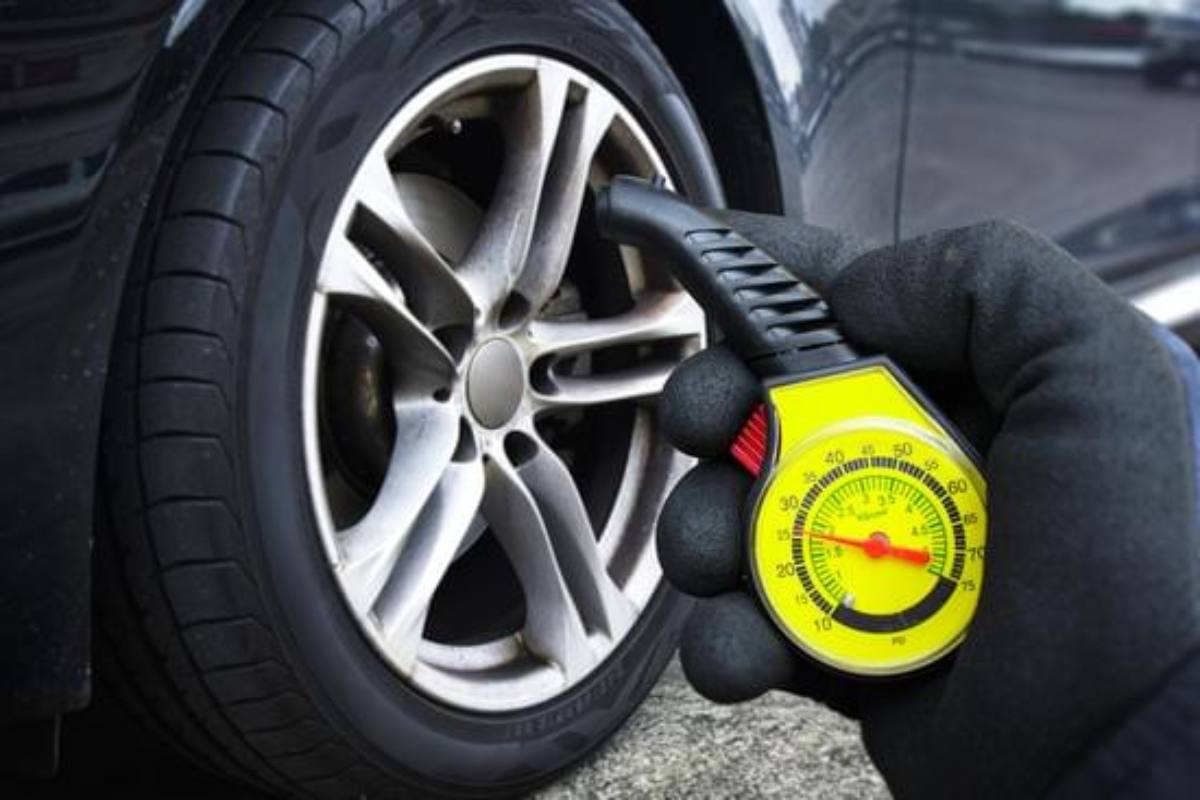
If your car feels floaty due to incorrect tyre pressure, the solution is as follows: first, park the car on a flat surface. Then check the tyre pressure with a Tyre Pressure Gauge.
If the tyre pressure in your car is low, first connect the air compressor to the car’s valve and slowly fill the tyres, checking until the pressure reaches the proper level of 30–35 PSI, which is the correct air pressure for car tyres.
If the pressure is higher than this, the car tyre has a valve with a pin inside. Press it and keep pressing it until the air drops to 30–35 PSI. In this way, you can correct your tyre pressure.
And if, after this, your car still feels floaty, there may be other issues, as shown below.
2. Worn-Out or low-Quality Tyres
If your car still feels floaty at high speed, I have already told you about one issue and its solution. If it still feels floaty, then one issue may be worn-out or low-quality tyres.
If your car has low-quality tyres, it can still feel floaty at high speed, which can cause serious problems. If your tyres are not of good quality, many issues can occur, including accidents, especially in rainy weather.
When you drive the car in the rain, low-quality tyres can cause it to slip, leading to a serious accident and making driving difficult. Based on my experience, I have provided the solution below so you can fix it.
If your car feels floaty at high speed due to worn-out or low-quality tyres, the solution is as follows: when you notice this issue, first park your vehicle on a flat surface.
Then wear gloves and remove the jack from your car, and lift the vehicle. After that, use a lug wrench to loosen the car’s tyre nuts and remove the tyres.
Then fit all new tyres and again use the lug wrench to tighten all the tyre nuts. After that, use a tyre pressure gauge to set your tyre pressure to 30–35 PSI.
After setting the pressure, lower the car from the jack and start the vehicle. Then take it for a drive. Now you will see that the vehicle is running correctly on the road.
If, after this, the car still feels floaty on the ground, I have also explained the issue and its solution below so that you can fix any problems yourself.
3. Weak or Worn Suspension
So far, I have told you about two issues causing your car to feel floaty. Below is another problem: weak suspension, which also makes your vehicle feel floaty.
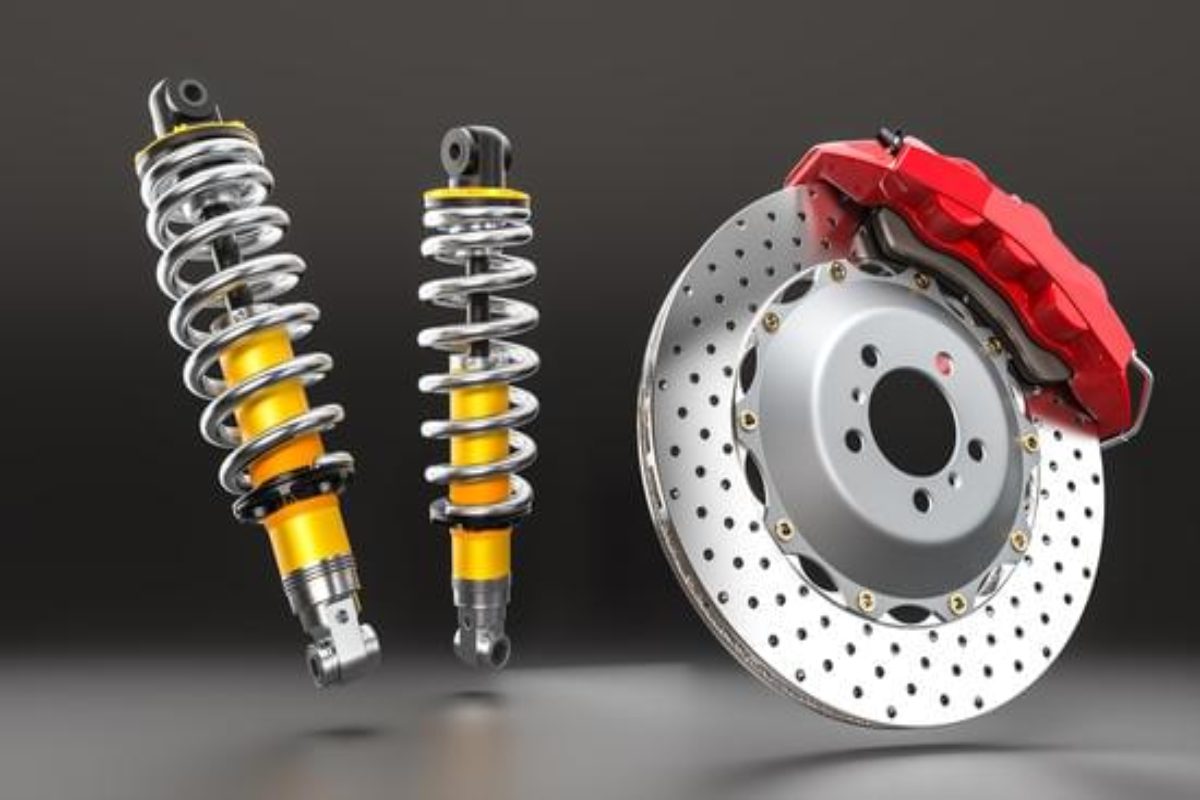
The suspension consists of two parts that enable your car to run correctly on the road. If these parts get damaged, your vehicle will feel floaty at high speed.
Because of this, you cannot control the steering properly, and when you try to stop the car, it does not stop properly. If you do not fix it, it can cause many problems, and you may have to pay a heavy price.
But I want to tell you that I have provided the solution below, so you can read it and fix this problem yourself.
If your car feels floaty due to worn or weak suspension, the solution is as follows: first, park it on the side of the road. Then you will have a jack, remove it, and lift your car.
After you have lifted your car, use a lug wrench to remove the old suspension bolts and replace them with new ones. After you replace it, install the latest suspension, then reinstall the wheels.
After installing the wheels, lower your car from the jack, start your vehicle, and take it for a long drive. Now you will see that the vehicle is running correctly.
If it still does not run properly, there is another issue below, which I have shown.
4. Wheel Alignment or Balancing Issues
If your car still feels floaty, another issue may be wheel alignment or balancing.
If your car’s wheels are not straight or if one side has more pressure than the other, your vehicle will feel floaty on the road and not grip properly.
If this issue occurs, your car’s brakes will not work correctly, your steering will go out of control, and an accident can happen.
If you want your car to last for many years, I have provided a solution below to help extend its life.
If your car feels floaty due to wheel alignment or balancing issues, the solution is as follows: first, park the car on one side, then jack it up.
After that, use the wheel alignment machine to check the wheels. If your wheels are correct, that is very good. If the wheels are not accurate, fix them using the machine.
After that, if your car’s tyre balance is not correct, fix it so that all tyres have proper balance. When this is done, tighten any loose nuts. After that, lower your car from the jack.
Once the car is lowered, take it for a drive to check that the balance is correct and that the vehicle is working correctly.
If it still does not work correctly, there is another issue below, which I have shown, and its solution is also provided.
5. Soft Hiatus Tuning
If your car still feels floaty on the road, it may be due to soft hysteresis tuning, which is an issue. If your car’s suspension tuning becomes too smooth, it loses grip with the road, causing your vehicle to bounce more.
When you drive it on the road, it feels soft, and when you apply the brakes padel, they don’t work quickly. This can cause significant losses, and you may have to spend a lot of money.
But I have explained the solution below, so with my 15 years of experience, make sure to read it.
If your car feels floaty due to soft hiatus tuning, the solution is this: first, park your car on one side, as I tell you in every solution. After that, lift the vehicle using a jack and then check your car’s suspension.
If your suspension is not tight, tighten it using a wrench or spanner. After tightening, check whether the suspension is too loose. If so, adjust it with a wrench.
After that, check whether it is now correct, then lower the car from the jack and take it for a drive. Now check whether it maintains a proper grip with the road. In this way, you can fix it.
If it is still not fixed, I have explained three more issues and their solutions below, so check them. Later on, as I tell you, no one else will tell you this.
If you read another article, it will only tell you the reasons, not the solutions. Read my article.
6. Lightweight Body or Tall Vehicle Height
If your car feels floaty due to a lightweight body or tall vehicle height, this is also an issue. I have already told you five issues and their solutions above, and this is one of them.
When your car is very tall or high, it does not maintain grip on the road, and you cannot control the steering properly.
When this issue occurs, you feel like the car is floating in the air, and the driver and other car owners become worried, wondering what is happening, and you may also face financial loss.
I am sharing the solution below based on my 15 years of experience, so be sure to read it if you want to fix this issue.
If your car feels floaty in the air due to a lightweight body or a tall vehicle height, the solution is this: first, do what I told you above, and then also do what I mentioned above.
When you have done that, then use lowering springs or a suspension kit to correct the vehicle height. After that, fix the wheel spacers so that the wheels work properly.
Then use a wrench to tighten any loose nuts or parts. After that, if anything is damaged, replace it. When you have done this much work, this issue will be fixed.
But if your car still feels floaty in the air, there is another issue I mentioned earlier, so you can read it and fix it yourself.
7. Aerodynamic Issues
If your car still feels floaty in the air, it’s an aerodynamic issue.
When the airflow does not pass properly over or under your car, it creates lift, which causes it to drive poorly on the road. If your car’s body panel, underbody, or poor design disturbs the airflow, your vehicle feels light.
When you drive the car, you cannot control the steering, and an accident can happen. This problem happens to many drivers, but I am telling you, as a friend, that I have provided the solution below. Read it to avoid this problem.
If your car feels floaty in the air due to aerodynamic issues, the solution is this: first, lift the vehicle with a jack. After that, check the underbody panels to see which parts are delicate and which are damaged.
If any parts are damaged, remove them with a screwdriver or wrench, install new panels, and then tighten them. Install the front splitters, rear spoilers, and side skirts.
When this is done, take the car for a short drive. When you do this, you will see on the road that your vehicle is no longer floating in the air. If it still floats, then there is another issue, which I have told you, so check it.

8. Overloading or Uneven Weight Distribution
If your car feels floaty in the air due to overloading or uneven weight distribution, this is also an issue. As I have already told you, seven issues and their solutions are above; this is one of them.
Your car feels floaty when you place too much weight on it and do not distribute it properly. This also puts the tyres at risk, and if you apply the brakes, they may not work correctly.
This can cause significant damage. I am explaining the solution for each issue below, and it is also provided.
If your car feels floaty in the air due to overloading or uneven weight distribution, the solution is this: first, park your car on one side, then use a jack to lift the vehicle.
After that, use a weighing scale to weigh the car. If it is too much, remove the excess load. After that, place the load in the middle of the vehicle and secure it with cargo straps.
When the load is secured, check the tyres and suspension, as adding weight to the car can affect them and cause damage. If they are damaged, replace them.
After that, take the car for a drive and check whether the issue is fixed. It is now hoped that this issue is fixed. As I have told you, I have explained eight issues and their solutions that cause a car to feel floaty in the air.
If any of these issues occur, you can read our article and fix them. Below, I have also shared a life lesson, which you should see.
Real-Life Example: When Car Feels Floaty at High Speed
I will tell you a real-life event from my life. Once, I was on my way to my own wedding, and on the way, my car started to feel light, as if it was floating in the air, and the steering also became a little loose on its own.
I became very worried. Then I parked my car on the side and took a bag from the back seat, which held all the tools. Then I checked all the issues, as I told you, and solved them the same way I explained.
Then I drove for a short distance and realized that the issue was now fixed. If you read this real-life story of mine, you will know that I am an expert and have worked for 15 years at a car company in the USA.
Later, I explained those things to you that you would not know, when to tell a mechanic, and how much the cost would be. You are also requested to read this carefully.
Common Mistakes Drivers Make That Reduce Stability
In this, I will tell you the mistakes many drivers make while driving. Below, I have listed those mistakes in bullets.
- Overloading the car or unevenly distributing cargo raises the car’s center of gravity, causing it to sway.
- Driving too fast around corners or during lane shifts puts extra stress on tyres and brakes.
- Ignoring tyre pressure or care can lead to flawed grip and high-speed instability.
- Sudden steering inputs or harsh braking can cause the car feel loose or floaty.
- Using worn or low-quality tyres dwindles traction and overall control.
In this, I have outlined the mistakes many drivers make. Now I am telling you below when you should inform the mechanic, so see that.
When Should You Get the Car Checked By a Mechanic?
In this, I will tell you when you should inform the mechanic. If you are unable to fix all these issues as I described in my article, you will have to say to the mechanic so he can fix them. I have also shown the cost of how much it will take.
Cost to Fix High-Speed Stability Issues
Above, I told you when to inform the mechanic; now, in this, I will tell you how much it will cost. If you fix these issues yourself, as I explained, the cost will be $10 to $30.
If you do not read my article and get these issues fixed by a mechanic, the cost will be $100 to $150, which is a lot of money. It is better to read my article and fix it yourself. Below, I have given prevention tips for you.
Prevention
Above, I have told you the cost, and here I will share the prevention tips and the questions and their answers on your mind.
- Keep tyres correctly raised to the recommended PSI.
- Return frayed or low-quality tyres regularly.
- Maintain brake parts and check for wear.
- Rotate tyres and check spin alignment often.
- Avoid overloading or uneven poundage allotment.
- Secure roof cargo and misjudge conversions affecting aerodynamics.
Frequently Asked Questions (FAQs)
1. What Causes a Car to Feel Unstable When Driving Fast?
A car can feel unstable at high speeds due to worn tyres, wimpy suspension, improper alignment, or inadequate weight distribution. These factors reduce road grip, causing the car feel open or floaty during turns and lane changes.
2. Can Crosswinds Affect Vehicle Strength on Highways?
Yes, strong crosswinds can push the car and cause it feel unstable, especially for tall or light vehicles.
3. Does Tyre Age Matter for High-Speed Stability?
Yes, tyre age matters for high-speed composure. Old or worn tyres lose grip, making the car feel loose and less controlled.
4. Can Worn Steering Parts Affect Straight-line Control?
Yes, worn steering parts like tie rods or bushings can cause the car wander or feel loose. This loosens straight-line control and resilience at higher speeds.
5. Does Vehicle Loading Impact Highway Driving Stability?
Yes, uneven or extreme vehicle loading raises the center of gravity, making the car sway and feel unsafe. Properly distributing weight improves high-speed strength and power.
Conclusion
A car feeling floaty at high speeds is usually caused by points with tyres, suspension, alignment, weight distribution, or aerodynamics. Regular maintenance, proper tyre care, and class loading can significantly improve stability.
Adjusting or inspecting these parts aids the car feel better-planted and more responsive. Staying proactive with checks assures safer and more confident highway driving.